Understanding Childhood Apraxia of Speech: A Parent's Guide to Supporting Your Child's Communication Journey
A comprehensive guide to Childhood Apraxia of Speech for parents. Learn about types of apraxia, why non-verbal children lose sounds, brain processes behind speech, and practical strategies to support your child's communication at home.
PARENT AND CAREGIVER RESOURCES
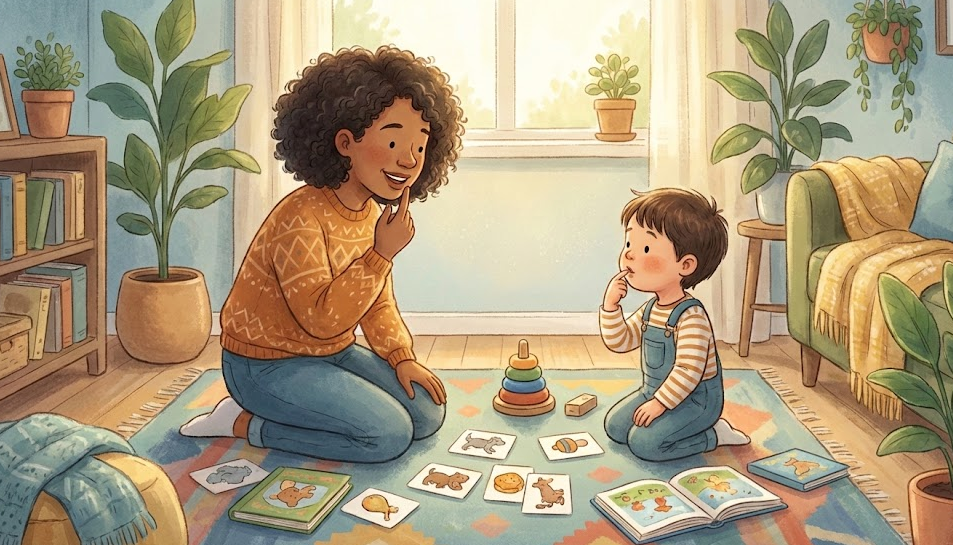

As a pediatric speech therapist with over a decade of experience working with children who have speech challenges, I've witnessed the confusion, concern, and countless questions that parents face when their child is diagnosed with any speech disorder. I've also seen the remarkable progress children can make when parents understand this condition and learn how to support their child's communication development at home.
This article aims to demystify childhood apraxia of speech, explain what happens in the brain during speech production, discuss the unique challenges we face during therapy, and most importantly, empower you as a parent to create an environment where your child can thrive.
What Is Childhood Apraxia of Speech?
Childhood Apraxia of Speech is a motor speech disorder that affects a child's ability to plan and coordinate the precise movements needed for speech. It's important to understand that children with CAS know what they want to say. Their challenge lies not in understanding language or having weak muscles, but in the brain's ability to plan and sequence the complex movements required to produce clear speech.
Think of it this way: speaking requires your brain to send detailed instructions to over 100 muscles in your lips, tongue, jaw, and throat, all working together in perfect coordination. For children with apraxia, the brain struggles to create and execute these motor plans consistently, even though the muscles themselves work fine during other activities like eating or smiling.
Types of Childhood Apraxia of Speech
While CAS is often discussed as a single condition, it's helpful to understand that children may present with different patterns and severities:
Developmental Apraxia of Speech:
This is the most common form, where the condition is present from birth or emerges during early language development. Children with developmental apraxia may have delayed babbling, limited consonant and vowel sounds, and significant difficulty combining sounds into words.
Acquired Apraxia of Speech:
Though less common in children, this occurs when a child who was previously developing speech normally experiences brain injury, illness, or neurological events that damage the speech motor planning areas. This might result from traumatic brain injury, or brain infections.
Apraxia Associated with Complex Neurodevelopmental Disorders:
Some children have apraxia alongside other conditions such as autism spectrum disorder, genetic syndromes, or metabolic disorders. In these cases, speech planning difficulties exist within a broader constellation of developmental challenges.
The severity of CAS also varies considerably. Some children may have mild apraxia affecting only certain sound combinations, while others have severe apraxia that significantly limits their verbal communication, sometimes resulting in a child being minimally verbal or non-verbal.
The Speech Production Process: What Happens in the Brain
To truly understand apraxia, it helps to know what needs to happen for speech to occur normally. Speech production is one of the most complex motor tasks humans perform, involving multiple brain regions working in seamless coordination.
The Planning Phase:
When you decide to say a word, your brain must first retrieve the linguistic information—what sounds make up that word and in what order. Then comes motor planning: your brain creates a detailed blueprint of exactly how your articulators (tongue, lips, jaw, soft palate) need to move, how much muscle tension is needed, the timing of each movement, and how sounds will flow together.
The Programming Phase:
This blueprint is then translated into specific motor commands. Think of this as converting the architectural plan into step-by-step construction instructions that your muscles can follow.
The Execution Phase:
Finally, these motor commands are sent to the muscles, which carry out the movements to produce speech sounds. Throughout this process, your brain receives sensory feedback—how your mouth feels, what you're hearing—and makes tiny adjustments in real-time.
In children with apraxia, the breakdown occurs primarily in the planning and programming phases. The brain struggles to create consistent, accurate motor plans for speech. This is why a child with apraxia might say a word correctly once, but then be unable to repeat it moments later. The motor plan wasn't stored reliably in memory, so the brain has to try to figure it out all over again each time.
The Unique Challenge of Sound Loss in Non-Verbal Children
One of the most heartbreaking aspects of working with non-verbal or minimally verbal children with apraxia is witnessing the phenomenon of sound loss. Parents will often report with frustration and sadness, "He said 'mama' last month, but now he can't do it anymore. It's like he's going backward."
This isn't actually regression in the traditional sense. What's happening involves several interconnected factors that are important for parents to understand.
Insufficient Motor Memory Development:
When a child produces a sound correctly during therapy or spontaneously at home, that success represents a moment when their brain stumbled upon the right motor plan. However, for that motor plan to become automatic and reliable, it needs to be practiced many, many times and stored in motor memory. In children with apraxia, especially those who are non-verbal, the brain's ability to encode and retain these motor memories is significantly impaired. Without sufficient repetition and reinforcement, the fragile motor pattern fades, much like trying to remember a phone number you only heard once.
Lack of Awareness and Sensory Feedback Integration:
Many non-verbal children with apraxia also have difficulty with sensory integration and body awareness. They may not fully register what their mouth was doing when they produced that sound correctly. Without clear awareness of the articulatory position and movement, the brain cannot create a strong, retrievable memory of how to recreate that sound. It's like trying to get back to a place you visited but having no memory of the route you took.
Limited Motivation and Engagement:
Sound production requires significant effort for children with apraxia. When a child has limited verbal communication and perhaps hasn't yet experienced the power of using words to get their needs met, they may not be motivated to practice sounds spontaneously. Additionally, many non-verbal children with apraxia have learned alternative ways to communicate—pointing, gesturing, leading adults to what they want—that work more efficiently for them than attempting the hard work of speech. When sounds aren't practiced outside of therapy sessions, they fade from the child's repertoire.
Coexisting Cognitive and Attention Challenges:
Many children with apraxia also have accompanying cognitive challenges, attention difficulties, or executive function weaknesses that impact learning and memory across all domains, not just speech. Working memory, which is crucial for holding and manipulating information during learning, may be limited. These children need more repetitions to learn any new skill, and they may need frequent relearning of skills that haven't been practiced regularly. The cognitive load of motor planning for speech, combined with memory challenges, creates a situation where newly learned sounds are particularly vulnerable to being lost.
Understanding these factors helps us approach therapy and home practice differently. We recognize that we're not just teaching sounds; we're working to build robust motor memories in a brain that struggles to create and retain them. This requires intensive, systematic practice with heightened awareness, strong motivation, and support for the cognitive demands of learning.
Challenges We Face During Therapy
Working with children who have CAS requires patience, creativity, and a different approach than traditional speech therapy. Here are some of the key challenges we navigate together:
Inconsistency is the hallmark of apraxia:
A child might produce a sound beautifully one moment and completely differently the next. This variability can be frustrating for everyone involved, but it's actually diagnostic of apraxia. Our therapy focuses on building consistency through massive amounts of practice.
The need for intensive, frequent therapy:
Research shows that children with CAS benefit most from frequent, intensive therapy sessions—often 3-5 times per week initially. This can be logistically and financially challenging for families, which is why parent involvement in home practice is so critical.
Difficulty generalizing skills:
Children with apraxia often struggle to use new sounds they've learned in therapy in spontaneous speech at home or school. We work hard on building bridges from structured practice to functional communication.
Slow progress:
Progress in apraxia therapy typically occurs more slowly than with other speech disorders. Small gains—like adding one new sound or improving consistency on a single word—represent significant victories and countless practice trials. Families need support to recognize and celebrate these incremental advances.
Coexisting challenges:
Many children with CAS also have language comprehension difficulties, phonological awareness weaknesses, social communication challenges, or sensory issues. We must address speech motor planning while also supporting these other areas of development.
Emotional impact:
By age three or four, many children with apraxia become aware that they cannot communicate like their peers. They may experience frustration, develop behavioral challenges related to communication breakdowns, or withdraw from social interactions. Supporting emotional well-being is an essential part of our work.
Creating a Supportive Home Environment
While professional therapy is essential, parents play an irreplaceable role in their child's progress. The home environment offers countless opportunities for practice and communication development. Here's how you can create the most supportive environment for your child:
Establish a Communication-Rich Environment Without Pressure:
Talk to your child constantly throughout daily routines, but without demanding they respond verbally. Narrate what you're doing: "Mommy is making your sandwich. First the bread, now the peanut butter." This provides language models without creating performance pressure. Children with apraxia benefit from hearing language even when they cannot yet produce it.
Use Multimodal Communication:
While working toward verbal speech, embrace alternative communication methods. Picture exchange systems, or communication apps on tablets can reduce your child's frustration and actually support speech development rather than hinder it. Research consistently shows that augmentative communication helps, not hurts, speech development. These tools give your child a way to successfully communicate while their speech catches up.
Create Structured Daily Practice Times:
Work with your therapist to establish a home practice routine. This might be just 10-15 minutes twice daily, but consistency is key. Make it playful and positive. Use motivating materials like your child's favorite toys or preferred activities. The goal is frequent, successful practice trials in a low-pressure setting.
Slow Down and Wait:
Give your child extra time to formulate their motor plan. When you ask a question or expect a response, wait longer than feels natural. Count to ten in your head. Children with apraxia need processing time to plan their speech movements, and rushing them creates anxiety and makes motor planning even harder.
Focus on Functional Words:
Prioritize practicing words that have power in your child's daily life—"more," "help," "open," family members' names, favorite foods. When children can use words to get what they want or need, motivation increases dramatically.
Acknowledge All Communication Attempts:
Whether your child uses a gesture, vocalization, sign, or approximation of a word, acknowledge and respond to the communication intent. "Oh, you want the ball! I heard you say 'ba.' Yes, ball!" This reinforces that communication is valuable and keeps your child engaged in the communication process.
Reduce Background Noise:
Children with apraxia need to focus intently on the motor aspects of speech. Turn off the TV during mealtimes and play times. Minimize competing auditory stimuli so your child can concentrate on listening to speech models and monitoring their own productions.
Build Awareness Through Touch and Movement:
Many children benefit from touch cues during practice. With your therapist's guidance, you might learn to gently touch your child's lip to cue a /p/ sound or touch under their chin for tongue sounds. Exaggerated movements—like big mouth opening—can help build awareness of articulatory positions.
Video Record Practice:
Short video clips of your child successfully producing target sounds or words can be powerful tools. You can watch them together, helping your child become more aware of what their mouth was doing when they were successful. These videos also help you and your therapist track progress over time.
Create a "Sound of the Week" Focus:
Rather than working on everything at once, your therapist might suggest focusing intensive practice on one or two specific sounds or words each week. Make this your family focus. Find that sound in books you read, during play, in songs. This concentrated practice helps build the motor memory more effectively than scattered practice on many different targets.
Maintain Realistic Expectations and Celebrate Small Wins:
Progress in apraxia therapy is measured in small increments. Celebrate when your child uses a word approximation more consistently, even if it's not perfect. Notice when they attempt a new sound, even if they don't get it quite right. Your positive response to their efforts is crucial for maintaining motivation.
Take Care of Yourself:
Having a child with significant communication challenges is emotionally taxing. Connect with other parents of children with CAS— Process your feelings with trusted friends or a counselor. You cannot pour from an empty cup, and your child needs you to be emotionally available and positive during this journey.
The Role of Consistency and Routine
Children with apraxia thrive on predictability. Establish consistent routines and use the same language during them. For example, the bedtime routine might always include the same sequence of activities with consistent language: "Bath time. Let's get bubbles. Wash your arms. Time to dry off." This predictability helps your child begin to anticipate the language and may make it easier for them to eventually participate verbally in these familiar routines.
Use routines as built-in practice opportunities. If your child is working on the word "up," incorporate natural opportunities throughout the day: "up" on the swing, "up" when climbing stairs, "up" when being lifted for a hug. This distributed practice in meaningful contexts helps with both motor memory and generalization.
Working as a Team with Your Therapy Provider
Your child's speech therapist is your partner in this journey. Maintain open communication about what's working at home and what's challenging. Share videos of your child's communication at home, as children often show different behaviors in therapy than in natural settings. Ask questions when you don't understand something. Request demonstrations of therapy techniques so you can practice them correctly at home. Don't hesitate to discuss your concerns, including worries about slow progress or questions about your child's long-term prognosis
Looking Forward with Hope
Childhood Apraxia of Speech is a challenging diagnosis, but it's important to know that children with CAS can and do make progress. With appropriate, intensive therapy and strong support at home, many children with apraxia become effective communicators. The timeline varies greatly—some children make rapid gains while others require years of consistent work—but improvement is possible.
Your child is so much more than their speech disorder. They have unique personalities, interests, strengths, and gifts. While working on communication, nurture all aspects of who they are. Support their friendships, encourage their interests, help them develop confidence in their abilities.
Some children with apraxia will always have a subtle speech difference, while others will develop completely typical speech. Regardless of where your child lands on that spectrum, they can develop into confident, capable individuals who communicate effectively and lead fulfilling lives.
Your role as a parent is not to become a speech therapist but to be your child's advocate, supporter, and safe haven. By understanding apraxia, creating a supportive environment, and working consistently on practice, you're giving your child the foundation they need to develop their communication skills to their fullest potential.
Remember, every child's journey is unique. Progress may not be linear—there will be plateaus and perhaps setbacks—but with persistence, patience, and the right support, your child can develop the communication skills they need to express themselves and connect with the world around them. You're not alone in this journey, and with each small step forward, you're helping your child find their voice.